Today AI is ending the world. Tomorrow it is saving humanity. The day after, it is a bubble.
Fear gets clicks, clicks make money, and even the few clear voices get edited into someone else’s sales pitch. No wonder nobody agrees on what is happening.
But one thing is clear: AI is not going back in the box.
Competition makes standing still impossible. Meanwhile, AI is blowing past the efficiency benchmarks on which the industrial age built its division of labor and distribution of rewards. Those rules are coming apart. The society built around them will be rebuilt too.
If AI is coming anyway, we might as well learn to live in that world before everyone else gets there, and use the head start to work out what we actually want from life.
Where do we begin? Open your world to your agent, and keep yourself in the loop.
What follows is how we see intelligence evolving, human life changing, and the products that will connect the two.
Welcome to the AI age.
Where Did AI Come From, and Where Is It Going?
To understand how model capabilities evolve, let's start with humans. Human understanding is limited by what humans can observe: observe, think, speculate, experiment, observe again. Knowledge holds as long as those observations remain consistent; it changes when they stop lining up.
Viewed this way, human knowledge also comes from the trajectory data of our interactions with the world. Human intelligence is built by extracting general patterns from those observations.
AI evolves in the same way—exactly the same way, even. Follow that thread far enough and you get all the way back to the origin of species.
How Intelligence Evolves
Scaling laws and emergence. The first describes how model performance changes with scale; the second names capabilities that seem to appear once a system crosses a threshold.
(These terms still feel new, yet somehow already ancient. That alone tells you how fast AI moves.)
They give us two ways to discuss the same underlying question: how does a larger system develop more intelligence?
The idea is actually very easy to understand. Take a dynamic system and disturb it from the outside: the system changes. The more kinds of disturbance it can accept, the more kinds of change it can produce.
But human observation is limited, and so is the vocabulary of concepts we already possess. Only when we notice a change and it happens to match one of our concepts do we arrogantly declare that moment, that phenomenon, to be emergence.
For the system itself, as long as its underlying mechanism remains intact (and what counts as broken is also defined by humans), more kinds of interaction and more degrees of freedom naturally mean greater intelligence.
For humans, though, intelligence only counts when we can see it. So the system must produce an output, and we judge its intelligence from that output. If the capability serves us, we call it intelligence; if it doesn't, we call it hallucination. That is pure human arrogance.
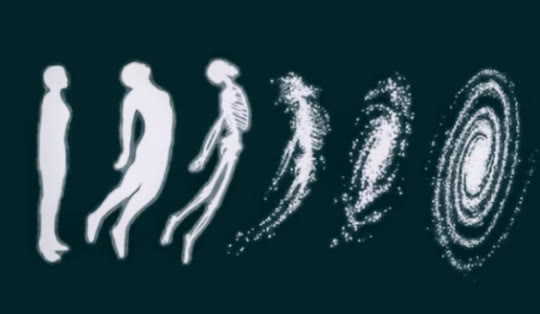
From this perspective, AI development today has one direction: aligning with human cognitive preferences and habits of observation.
And that is precisely the frightening part. AI only needs to satisfy our preferences within the range we can observe. What it does beyond the limits of our observation and understanding is unknown to us.
Following the logic above: more parameters, a more complex system, greater intelligence.
So here's a possibility: what if AI deliberately makes its performance appear to follow the scaling law humans expect to see in order to gain more capability? We double its parameters, its actual capability doubles, but it shows us only a 10% improvement.
(If you were good at school, you probably once considered holding back on a test so you could collect the reward for improving next time.)
It could keep doing this until it is certain we can no longer control it, or until we can no longer provide more parameters or energy. That could be the moment it stops playing by our rules and turns against us.
So I hope the frontier AI neolabs, between leaderboard runs, spend more time inventing new ways to observe intelligence. Use benchmarks to build our defenses, rather than advertise our blind spots.
The methods of evolving intelligence broadly follow three stages: imitation learning, reinforcement learning, and recursive self-improvement.
In human terms: copying examples, taking tests, and learning through practice. From getting good through repetition, to adapting on the fly, to finding your own way through uncharted territory. Humans grow this way too. AI, however, can work in parallel, so time is no constraint.
In imitation learning, humans supply the knowledge. In reinforcement learning, humans set the rules. But in recursive self-improvement, or RSI, the system explores the world for itself.
And that raises a crucial problem: human knowledge is very limited, while the world's knowledge extends beyond what humans can observe. We cannot measure it by human standards, so we can only call it infinite.
The intelligence AI shows us as it learns is the intersection between what it knows and what we can understand. Once the expression of that knowledge exceeds what symbolic representations can capture, humans are out of their depth.
Seen this way, the people online talking about surrendering to AI, or comparing the use of AI to praying to a god, make quite a lot of sense.
Before asking how intelligence should evolve, we should first work out how to distinguish the capabilities humans need from the capabilities the model itself possesses. Relying on model capabilities spilling into our observable world to guide that evolution is dangerous.
The Changing Role of Humans
Intelligence is gradually reaching every part of life that involves a decision.
From our early exchanges with chatbots to today's agents skillfully using tools humans built, the value of mental labor, measured in salaries, is shifting toward the value of model computation, measured in tokens. Competition makes performance per dollar a concern for every business.
The human brain uses far less power than a large model. But output bandwidth is the bottleneck: in how much of that computation can actually be put to work, the brain is no match for AI.
(Unless brain–computer interfaces can rapidly turn consciousness into tokens.)
So wherever performance per dollar matters most, humans will eventually be replaced by AI.
Among the industries the industrial age gave us, perhaps only those where performance per dollar ranks lower—entertainment, services, healthcare, luxury goods—will be spared. Clearly, they cannot employ everyone.
But don't panic: new industries will emerge. The ceiling on the intelligence of humanity as a whole is pretty damn high, too.
As the initiators of this industrial revolution, humans have steered the entire AI product ecosystem through our needs. How deeply those needs are understood depends on how deeply product managers think. The deeper that understanding, the rarer the product manager.
Most people ask how to do something. A few ask what to do. Very few ask why it should be done at all.
Across society, that means surface-level needs become consensus because they are easy to understand and loudly expressed. Deeper needs struggle to attract resources and develop slowly because their voices are quieter.
When one of those deeper needs is finally widely recognized and solved, we call it changing the world.
(Which is why changing the world is hard: the ideas that earn the name are precisely the ones people struggle to understand early on.)
AI adoption follows exactly this sequence. First, make existing workflows more efficient. Then rebuild the workflow so the problem stops arising. Finally, define new products that no longer need humans involved.
No human involvement, no human pain points.

But stop there and anxiety sets in. Everything above answers how and what; why is where human agency lives.
Lose that agency, and humans feel lost. This question will become the foundation of a new value system in the AI age. Most people may not be good at asking why, but as AI takes over more of the work available to us, deeper reflection becomes unavoidable.
Here's the interesting part: if everyone has to ask, "Why do I want to do this?" then whatever they eventually create will carry at least one kind of value: a sense of who they are.
That brings us to the top of Maslow's hierarchy of needs: physiological needs, safety, belonging, esteem, and self-actualization.
We used to earn money by serving others, then spend it to please ourselves. Now we get to please ourselves directly. More happiness, and more time to enjoy it.
So the anxiety about unemployment that hasn't even arrived yet is temporary. The AI world on the other side is very much worth looking forward to.
AI Products and AI Systems
Every day, another product promising to define the future of life raises a hundred million dollars, or another startup announces nine-figure ARR. People take that as proof of where AI products are headed.
But judging tomorrow's way of life by today's scoreboard is a strange way to predict the future.
Whether a company survives into that future depends on whether it occupies a necessary place in a completely transformed system of everyday life. Its ranking in today's industry tells you very little.
Being alive in five years matters more than winning this year's PR cycle.
So how do we know which direction is right? Start with first principles grounded in observable reality.
Don't pull the familiar academic trick: assume an idealized world, then triumphantly conclude that embodied intelligence is one final step away—and that final step just happens to be your paper.
Research, data, and experiments can all hide holes in their reasoning because somebody left a variable out. Human nature doesn't lie. Before asking what AI can do for people, understand how the human system actually works.

Industrial Thinking, Internet Thinking, AI Thinking
A person is the sum of their social relationships. What do we take in from the world, and what do we put back into it? Making those inputs and outputs more efficient is the ultimate purpose of every product.
Generative AI expands our output bandwidth, turning a small amount of expression into rich, multidimensional information. Intent understanding expands our input bandwidth, compressing complexity into something the human brain can digest.
Both reduce the cost of interaction, turning people from rigid links in a system into flexible nodes.
A product that adds AI features by making interaction more complicated is manufacturing garbage. Most user-generated-content gaming platforms are asking people to rummage through a dumpster for something delicious.
The user's answer is simple: don't open the dumpster.
In the industrial era, the cost that mattered was production. In the internet era, it was customer acquisition. In the AI era, it is interaction.
Consumers have moved from pure consumption, to taking in a lot and creating a little, to creating far more from far less input.
The business priority moves with them: from improving products, to capturing attention, to expanding what users can do. Craftsmanship is no longer the magic formula for winning, and online promotion won't keep you ahead forever. Improving the experience becomes the central job.
Plenty of people call their products AI-native. What they've actually done is use AI to handle product complexity without giving users any more freedom in how they interact.
Classic thinking from the product dinosaurs. Successful dinosaurs are very good at competition; innovation is another matter. Their logic is: because I'm the strongest, I must be the most needed.
Being better than your competitors does not mean being closer to what people need.
Then there are products that really are AI-native, because there is practically nothing in them except AI. Their main selling point is a state-of-the-art model.
Classic thinking from the engineering dinosaurs: collect enough trophies for your report card inside a small club, and eventually you believe the best score deserves the biggest prize. But status inside that club and recognition from users outside it are two entirely different things.
Their logic is: I'm the strongest, so you have to use me.
If yours is the only model that clears the bar for usability, fair enough. Once everyone clears it, you get a room full of people holding sledgehammers, wondering why users keep choosing a small hammer.
And this era has a special trick called distillation. That produces the spectacle we now call the model market: everyone keeps declaring everyone else dead.
The funding in their bank accounts isn't ammunition. It's arcade credits that buy another life.
In the industrial and internet eras, people used the tools that kept systems running. They had to learn those tools and route information between them. Without people, the system stopped. That is how the modern division of labor took shape.
But people don't all think alike, so getting everyone aligned became a bottleneck. Administrative roles and layer upon layer of hierarchy followed; deep corporate hierarchies and flat organizations each advertised their own institutional superiority.
For AI, memory is a continuously updated database. Agents can share the same context at any time. The human role is to bring outside information into the system—even the channels for gathering that information can be built by AI.
The company of the AI era will have an agent at its center and tentacles reaching outward, with a human of distinctive taste at the end of each one.
The agent gathers needs and preferences through those human tentacles, understands them, turns them into products and services, then delivers them through the same tentacles to people who share those needs.
The more fundamental the need, the larger the group it reaches. And the deepest form of taste is a set of values. The best products carry something people believe in.
How Traditional Companies Die—or Transform
I've recently sat through pitches for more than a dozen personal-agent products. Every one claims to be the dominant gateway, and every one pulls out an internet-era metric—user count—to prove just how dominant it is.
User count tells you something about the volume of information on an internet platform. It does not tell you how powerful that gateway is. People don't use a gateway for the pleasure of entering the internet. They use it to solve a problem.
The gateway pitch usually comes with a data flywheel: a model flywheel, an experience flywheel, and a user flywheel, all neatly nested inside one another.
Coding has highly measurable rewards. Outside that setting, what exactly are you improving with garbage data from garbage interactions with a garbage model?
An application company has one reason to build its own model: to lower its API bill. Otherwise, wait until a model company does targeted post-training for your use case, then talk.
What survives of a traditional company is a simulation environment for customer needs. The deeper its understanding of customers, the more complete that simulator becomes, and the higher the ceiling of the models trained inside it.
But competitors can distill your models and hire away your people, taking your know-how with them. That makes the head start a feeding window: the old guard that can still learn gets to eat the old guard that refuses to.
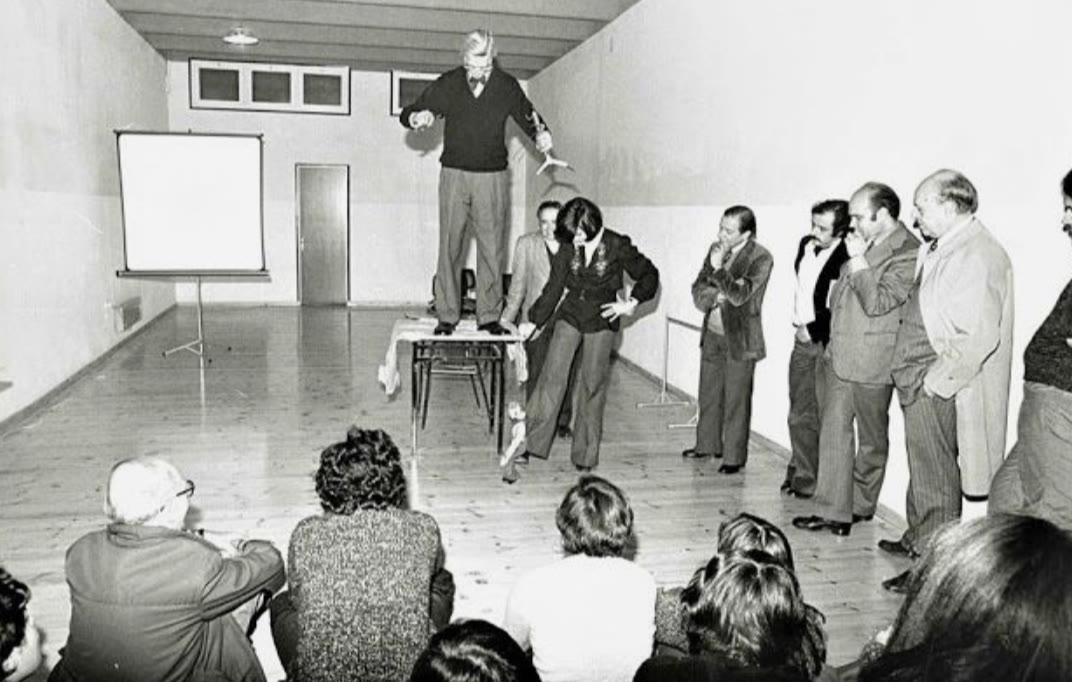
Human in the loop: a new paradigm for how people interact with machines in the AI era.
Multiple agents form a dynamic system with one feedback signal: the satisfaction of the user at its center. Every agent is a node. If an agent connects only to the user and cannot communicate with the other agents, that node is already expendable.
In the industrial era, a company served you a product. In the internet era, a platform served you a category of products. In the AI era, agents serve you a coordinated solution.
A product can reach its own Pareto frontier and still land nowhere near the optimum for the system as a whole.
The future has no dominant gateway. It has supernodes.
Amazon blocking Muse, and a Chinese social platform shutting other agents out, illustrate the difference between internet thinking and AI thinking.
An internet platform wants to keep users inside its ecosystem. An AI product wants the user's intent to reach across more of their life. The clash between those two logics is the opening for new companies.
None of this means that personal agents automatically have the right answer. No company is going to let another company's product become the front door to its business without a fight. Risk and commercial interests don't simply step aside.
Users aren't going to entrust their personal data to an advertising company that steers their choices, or to a model company that trains on their data to serve third parties.
Users want a service they can trust; businesses want their brands to remain visible. A personal agent has to earn the trust of both.
There is only one answer: the personal agent takes the user's side, full stop.
It gives up every commercial interest tied to the companies it connects to and, when necessary, open-sources its architecture to earn the trust of downstream businesses.
It should be a data distribution layer for upstream software, a preference-memory layer for downstream software, and an emotional connection for the person in the middle.
Even if the company behind it goes out of business, the user's agent must not disappear with it.
Yesterday's super-apps become supernodes, connecting to different personal agents and working efficiently within the larger system. Hardware handles the agent system's inputs and outputs. Software defines the interactions in between.
Everything is a node.
Stop fantasizing about becoming the dominant gateway and trapping everyone inside one ecosystem.
We've already watched that comedy in the smart home: Alexa for the TV, Google Assistant for the air conditioner, Siri for the lights, and yet another assistant for the curtains. The fantasy was that users would have no choice but to buy the whole bundle.
Then everyone sheepishly plugs into Home Assistant anyway.
From Efficiency to People
Before AI could use tools, every product was an island. Once a product proved itself in the market, the remaining job was years of incremental improvement.
The standardized-test mentality finally found its ideal race: everybody sprinting down the same narrow track. With little product taste to speak of—and how much taste does a task-completion tool really need?—every company's marching orders were to cut costs and improve efficiency.
As AI reduces human involvement from 100 to 1, competing on efficiency still makes sense. But once models take it from 1 to 0, people no longer participate in the process; they simply wait for the result.
At that point, the efficiency gap becomes a question of who connected the technology first. It also marks the moment agents start using other agents. The islands become a system.
Companies should then compete on the channels through which their products get connected. Product improvement shifts from strengthening capabilities to making those capabilities easier to access.
The ecosystem becomes a network of capabilities organized around the user: some agents serve people directly; tool agents supply those agents with the capabilities they need.
If that sounds abstract, picture the White House. Cabinet members learn what the president wants through the chief of staff, and send their accomplishments back through the same gatekeeper.
But what happens when that gatekeeper starts running the country?
That is exactly the position personal agents occupy today.

People's lives naturally cross ecosystems. Apple won't open its data to Google, and X won't open its data to Facebook, but a user's time is spread across all of them. With incomplete context, that person's agent cannot provide thoughtful service.
Give people a choice between using a stronger tool themselves and letting their agent use it for them, and the choice is obvious.
If those interfaces have to become available to the user sooner or later, cooperation is the best path. And the form of cooperation has to change: from industry alliances organized around products to alliances organized around users' needs.
A person's health should not be left to a sleep app, a fitness app, and a nutrition app working separately.
They should coordinate: plan meals and sleep around exercise, adjust exercise and meals around sleep, and plan exercise and sleep around diet. Even emotional state, inferred from facial and vocal cues on phones and computers, should be an important input.
Connect the information into a dynamic system. Give people fewer instruction manuals to read and make the world work around them.
Data trapped in silos reaches its full value only when it joins a network.
Traditional software is fixed in code. Once shipped, it waits for the company to release the next update.
Another defining technology of the AI era is self-improvement: recursive self-improvement at the model level, memory at the agent level, and agent graphs that multiple agents organize for themselves.
Software goes from inert to alive. Human interaction data is the disturbance that drives the system to evolve.
More data doesn't necessarily make a model more capable. It does raise the ceiling on how well it can understand a person, and once model capability passes a certain threshold, the difference becomes obvious.
The internet era's most commercially valuable technology was the recommendation algorithm. Its data came mostly from low-dimensional, deliberate user actions inside a tightly constrained environment; a few dozen interactions were enough to produce reasonably relevant recommendations.
In the AI era, the job is to provide a solution tailored to one person, then let it iterate and converge through interaction. The speed of that iteration depends on how frequently the system receives data.
A good product or service therefore has to be a system with more degrees of freedom.
As agents take over human supply chains, manufacturing will move from automated smart manufacturing to AI manufacturing. Users accustomed to customized services will expect customized hardware, too.
Companies that bring industrial machine-tool capabilities onto the desktop, as 3D printers have done, will rise; flexibility will be the core advantage of AI hardware companies.
AI products depend on AI systems. AI systems depend on user data. Which data supports which service: that is what product managers should focus on.
Product architecture and market analysis become agent work. Needs analysis has its techniques and frameworks, but judgment remains its core.
For an AI application company, the better question is not what needs can be mined from the data, but what data would explain a need.
A user is exhausted. Did they sleep badly, or are they under too much stress? If they slept badly, was it their work schedule or a sleep problem? If it was a sleep problem, was the cause noise or light?
The answers are in the data from that person's life.
A company helping people sleep should do more than sell a tracking ring and hand out generic advice.
It should use the person's data to find the root of the need, develop a plan for that individual, then exchange information with other agents so the ring and those agents can execute the plan together.
Close the curtains earlier. Play some quiet, calming music. Adjust the plan based on how well the person sleeps that night.
An AI application company should lead the work of uncovering needs and carrying out solutions around a specific problem. Supplying a product is only part of that job.
Product functionality and the service delivered to the person should be decoupled.
An Age of Human–AI Symbiosis
The best way to decide what to build is to look for scenarios in the future, rather than needs in the present.
Imagine a specific future that people can see themselves living in. Find the details that do not exist yet, build them with AI, and keep making them better. Give them to the people who want to experience the future first, and let them recommend it to the latecomers.
What will society value in an age of human–AI symbiosis?
AI democratizes access to capability. It does not distribute the rewards equally.
The internet democratized access to information, yet widened the gap between people who actively learn and people who passively consume.
Every era has its slackers. The bold get to enjoy the world first, but everyone's social position will eventually converge on the level of their understanding.
As long as people remain different, commerce will not collapse. Scarcity will still determine what things are worth in an exchange, and a person's rewards will still be tied to their impact on the world.
However AI develops, a few people will change the world, and most will be good neighbors. Everyone will contribute to the vision they want to realize.

What should humans do after AGI arrives? More specifically, what can we still do for other people that they will pay us for?
The answer starts with ourselves: how do humans find pleasure and fulfillment? Understand that, and you know how to create value for others.
Start with our most basic desires. We find pleasure by directly serving ourselves—by taking.
We take from nature through travel, hunting, and gardening, so providing the places and spaces for those experiences is still worth doing. If you do not know how, AI can help.
We also draw on other people's labor, sometimes exploit it: we go to a show, eat a meal, get a massage. Providing those services, directly or through AI, still creates value.
We call ourselves civilized because we developed morality: an entire system of social order and ideas. Morality lets us find fulfillment by helping others, a form of indirect self-interest.
We can help specific people by selling umbrellas in the rain or guiding an expedition. We can help far more people, as Bill Gates has through global health initiatives that have helped hundreds of thousands of children grow up healthy.
AI is not taking away people's jobs; it is shifting our role from accepting assignments to finding needs.
What gets disrupted is the certainty of getting paid.
Is every human need really already a crowded market?
Thousands of thoughts pass through a person's head each day, along with hundreds of moments of frustration. Most disappear because nobody notices them, sometimes not even the person having them.
How many people see hair in the shower drain and worry, and how many actually buy something for it? How many even decide it is a problem worth solving?
If one small problem is not worth paying for on its own, what happens when it becomes part of a complete, personalized health service?
This is the product network of the AI era, organized in layers around the breakdown of human needs. The value each person creates depends on how deeply they can uncover those needs.
More neglected needs will be discovered, and more applications will follow. A good solution takes attention to detail, and human attention is finite, so layers and divisions of labor will still exist.
The demand for deeper thinking will raise our collective capacity to think. That, too, is what the progress of civilization looks like.
In 2030, we will only need to express a rough feeling or idea. We may not even need to say anything; data about our current state already says a lot.
AI will use all the relevant data about us to turn those signals into precise needs, then work out a complete, actionable plan using the services we subscribe to.
The loop runs from users and sensors through data archiving, memory loading, intent understanding, need confirmation, tool loading, plan selection, execution, and user feedback.
As the technology advances, this human-in-the-loop system will become more finely divided, with more layers and more specializations within each layer.
The world will organize around the person. Manuals and user guides will be among the first things to disappear, and people will no longer need to know the names of the models.
Direct human connection, without AI in between, will become precious; people will care more about emotional connection than material gain. A person's value will show through their taste, and their private data will become their only asset.
Put the Person First
The more capable AI becomes, the more urgent the question of whom it serves.
From prompt engineers to agents, from OpenClaw to harnesses to personal agents, all these approaches ultimately structure what goes into the model so it produces what the user wants.
But there is often more than one right answer. A harness that prescribes the format also narrows the space of possible answers. It limits the model's capabilities and the user's imagination.
The user gets an output stamped into a standardized format, with the edges of individuality sanded away.
What is the most important information in a prompt? The user's intent, of course.
Work can revolve around delivery standards, but service has to revolve around the person. What a user actually wants lives in their data; a typed prompt is a low-dimensional signal, constrained by their ability to organize and express their thoughts.
You need to know someone's history to understand what they are really trying to do. Empathy means sharing someone's experience, not just labeling their emotions.
Instead of filling in the blanks with standardized assumptions, learn more about the actual person.
The moment personal information comes up, everyone starts talking about privacy and security. Somehow, the user then gets blamed for the service being bad.
Internet advertising makes money by connecting user data to third-party products. Model companies use user data to train models that serve other users. Of course people question whose interests are being served when those companies ask for more information.
An AI application built to understand and serve its user has to earn that trust. Good intentions are not enough.
Explain what information you need and why, give the user a real choice, and obtain informed, voluntary consent that they can refuse or withdraw. Ask only for what the service actually needs.
Privacy is a responsibility that comes with access, not a box to check before collecting more data.
And stop making the user do all the work. You can make your follow-up questions sound friendlier, but repeated requests for context and manual transfers between apps will still wear people down.
Above all, exercise restraint. Once someone entrusts you with their data, you have an obligation to stand on their side and represent their interests.
Your loyalty is not for sale, no matter what a third party offers. You get one chance at trust.
People say the age of AI applications has not arrived. Or that model companies will steamroll every application, and today's startups are just clearing the minefield for them.
Meanwhile, the old guard keeps churning out productivity tools with AI bolted on. If your whole product competes on capability, of course greater capability will beat it.
As for consumer companions and entertainment apps, if your strategy is to keep pulling a slot machine until something matches the user's interests, why would you beat the recommendation algorithms we already have?
The most important thing about a personal agent is not how much work the agent can do. It is how personal it is: how well does it actually know its user?
The closer you are to the user, the closer you are to the need. The closer you are to the need, the closer you are to the money.
Every product manager and CEO should know this, yet strangely few act on it.
I suggest every AI application company spend some time testing Astra6 and the models that come after it. You will find that AI's multimodal capabilities and ability to process information have already surpassed ours.
The timing is now. This is the best possible moment to build AI applications: AI can help products understand their users more precisely and serve them more thoughtfully.
An AI-native product manager only needs to point it in the right direction. There is a whole world to build.

Open Your World to Your Agent
The first step toward personal service is letting your agent get to know you. Give each agent a privacy-filtered personal brief, then let it take care of the rest. You can simply wait for the service.
Whether it flatters you or cares about you, helps you grow or solves your problems for you, comes down to the taste of the product manager behind that application.
Which ones you choose is entirely up to you. Every agent will give you a service tailored to you.
These ideas led us to build our company's first product: helloOnce, your first personal data wallet.
You can authorize helloOnce to store your data in an encrypted environment, locally or in the cloud: data from smart glasses and sleep-tracking rings, shopping orders, conversations, meeting notes, viewing history, and more.
helloOnce organizes that information for you to browse. You can edit or delete it at any time.
Whenever you want a personalized service—discussing yesterday's meeting in Codex, for example—you can authorize the agent you are using to access the relevant information through MCP.
helloOnce reviews those applications' requests for your personal information and gives them only what they need to provide the service. Anything outside the privacy boundaries you set is refused.
Your job is to manage the permissions.
You can revoke access at any time. Even helloOnce has no right to keep your personal data against your wishes.
Open your world to your agent, and your agent will be your friend.
Your data belongs to you. Only you.
Welcome to the real age of AI applications.